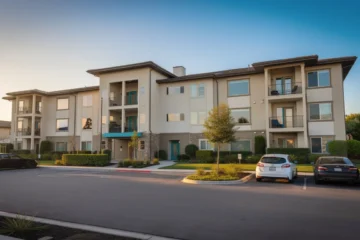

For many owners, the phrase “as is” sounds synonymous with “fire sale.” Yet in a tight, data‑driven real estate market, a carefully planned as is home sale with no repairs can be both efficient and financially sound. By understanding how investors, cash buyers, and conventional purchasers evaluate risk and price, you can structure a transaction that minimizes hassle without unnecessarily discounting your property. Table of Contents
Key Takeaways Strategy Primary Benefit Key
Action Impact on Net Proceeds Strategic Pricing Aligns price with condition and buyer pool Benchmark against investor sales and renovated comps Reduces unnecessary discounts of 5–10%
1. Clarify Your Objectives
and Constraints Upfront Before deciding how to structure an as is home sale no repairs, it is essential to define your business objectives with precision. Are you aiming to maximize absolute price, shorten your time to close, eliminate personal involvement in repairs, or some combination of the three? Different goals will point you toward different sale channels, different buyer types, and different negotiating strategies. For example, a corporate relocation or an impending job transfer typically elevates speed and certainty over extracting the last dollar of value; a portfolio owner repositioning assets may prioritize a clean disposition with minimal operational distraction. Hassle Free Home Sale: Comparing 5] You should also quantify your constraints. Establish your latest acceptable closing date, your tolerance for multiple showings and inspections, and your capacity to carry ongoing expenses such as taxes, insurance, HOA dues, and utilities. Carrying costs can be substantial: national data commonly pegs average monthly holding costs between 1% and 1.5% of a property’s value when all expenses are included. Over six months, that can quietly consume the equivalent of a major price concession. Recognizing this helps reframe a slightly lower but faster as is offer as potentially superior in real economic terms. Home Buyers for Problem Properties: 5] Once you define objectives and constraints, you can align them with the appropriate solution set. Corporate professionals, investors, or owners of rental property may find it more efficient to work with specialized home buyers for problem properties and as is sales, rather than spending months navigating the traditional listing cycle. Resources like "Hassle Free Home Sale: Comparing 5" and "Need to Sell My House Quickly?" on the Casey Sullivan Real Estate blog provide comparative overviews of options that can match different objectives, from conventional listings to direct cash offers. Cash Offer for My House: 6
-
Clarify whether speed, certainty, or price is your top priority.
-
Quantify carrying costs over 3, 6, and 12 months.
-
Decide how many showings and inspections you are willing to accommodate.
-
Determine your latest acceptable closing date before negotiations begin.
-
Maximum Speed Professional cash buyer / investor: 7–21 days Lower emphasis on top-of-market price
-
Highest Potential Price Traditional retail buyer via listing: 45–75+ days More showings, inspection contingencies, and repair requests
-
Balanced Outcome Specialized as is home buyer: 14–45 days Moderate discount for high certainty and limited repairs
Pro tip: Document your objectives and constraints in writing before you request quotes or list the property. Use that document as a decision framework so you do not overvalue headline price at the expense of time, risk, and carrying costs.# 2. Price Strategically for an
As Is Home Sale No Repairs Pricing is the cornerstone of a successful as is home sale no repairs. The aim is not simply to discount the property because work is needed; instead, you should price in a measured, data-based manner that reflects the scope of deferred maintenance, the local buyer pool, and realistic after-repair value (ARV). Professional investors typically work backwards from ARV, subtracting renovation costs, carrying costs, transaction fees, and a required profit margin. Understanding this framework enables you to assess investor offers analytically instead of emotionally. How to Sell My Rental Property] Start with three data sets: recent sales of comparable renovated properties, recent sales of as is or distressed properties, and active competition in your immediate submarket. This triangulation reveals not only what a fully updated home may command, but also how the market has historically discounted homes with similar issues. Where possible, account for major capital expenses separately (e.g., roof, HVAC, foundation, or plumbing) because these can materially influence both investor acquisition pricing and retail buyers’ willingness to proceed without credits. Need to Sell My House Quickly?] For business professionals and investors, it can be useful to model different pricing scenarios in a spreadsheet, adjusting for time to close, expected concessions, and probability of fall-through. You may find that the net present value of a well-structured cash offer is competitive with or superior to a higher list price that requires months of waiting and potential renegotiation after inspections. Insights from resources such as "Cash Offer for My House: 6" and "10 Hidden Home Selling Fees That" on the Casey Sullivan Real Estate blog can help you quantify how commissions, seller credits, and hidden transaction expenses erode seemingly higher contract prices. [10 Hidden Home Selling Fees That
-
Estimate ARV using recent renovated comparable sales within a tight radius.
-
Obtain at least two contractor or investor estimates for required repairs.
-
Quantify transaction and carrying costs over your estimated marketing period.
-
Compare net outcomes for cash vs. financed buyers, factoring in time and risk.
- Scenario Contract Price Estimated Costs (Fees, Repairs, Carry): Time to Close Estimated Net Proceeds
- Traditional Listing, Retail Buyer | $400,000 | $60,000 | 75 days | $340,000
- As Is Sale, Financed Buyer | $370,000 | $35,000 | 45 days | $335,000
- As Is Sale, Professional Cash Buyer | $350,000 | $15,000 | 14 days | $335,000
Pro tip: Anchor your pricing discussions around net proceeds and time to close rather than list price alone. Professional buyers respond more constructively when you demonstrate an understanding of ARV, repair costs, and risk, and you are more likely to avoid unnecessary discounts.# 3. Disclose and Document: Reduce Buyer Risk, Protect Your
Net Transparent disclosure is a critical component of any as is home sale no repairs. While selling as is means you are not agreeing to perform improvements, it does not relieve you of your duty to disclose known material defects in most U. S. jurisdictions. From a business standpoint, proactive disclosure accomplishes three objectives: it reduces the probability of post-contract renegotiation, it mitigates legal risk, and it allows serious buyers to price risk more accurately, which often results in more reliable offers. Start by compiling all known information about the property’s condition: prior inspection reports, invoices for past repairs, insurance claims, and any engineering or structural assessments. Document recurring issues such as water intrusion, foundation movement, roof leaks, or mechanical failures. Providing this information upfront positions you as a credible, sophisticated seller and helps reduce the perceived risk premium that buyers and investors might otherwise build into their offers. For properties with significant defects, such as long-deferred maintenance or tenant-related damage, buyers may perceive these as problem properties. In these cases, working with specialized home buyers for problem properties can be beneficial. The Casey Sullivan Real Estate article "Home Buyers for Problem Properties: 5" outlines professional options that are specifically structured to handle complex condition issues. These buyers are accustomed to reviewing detailed documentation and underwriting properties quickly, which can support more accurate pricing and reduce the likelihood of last-minute price cuts.
-
Prepare a consolidated disclosure packet that includes prior inspections and repair invoices.
-
Highlight both issues and recent improvements to provide a balanced view.
-
Clarify in writing that the sale is as is, subject to local disclosure requirements.
-
Offer buyers a reasonable inspection window to confirm your disclosures rather than re-discover them.
Pro tip: When possible, order your own pre-listing inspection and share it with prospective buyers or investors. While this involves a modest upfront cost, it can substantially reduce renegotiation risk and demonstrate that your as is position is grounded in full transparency.# 4. Choose the Right Buyer Type and Sale Channel
A successful as is home sale no repairs hinges on aligning your property and objectives with the right buyer type and sale channel. Broadly, your options include traditional retail buyers using mortgage financing, local or institutional investors paying cash, and specialized as is home buyers like Casey Sullivan Real Estate that focus on speed and convenience. Each category has distinct expectations, financing constraints, and tolerance for condition issues.
Retail buyers often seek primary residences and may be more sensitive to visible defects, appraisal outcomes, and lender-required repairs. Even in an as is context, their lenders may demand certain issues be addressed before closing, which can introduce friction and additional negotiations. Cash investors and professional as is buyers, by contrast, evaluate properties through a purely financial lens. They are accustomed to deferred maintenance and problem properties, and they structure their offers to incorporate repair risk, allowing you to avoid the uncertainty of lender-driven conditions.
The Casey Sullivan Real Estate resources "Need to Sell My House Quickly?" and "Hassle Free Home Sale: Comparing 5" provide structured comparisons among these channels, including traditional agents, iBuyers, local investors, and professional direct buyers. Consulting these guides can help you identify which channel best matches your timeline, risk tolerance, and willingness to engage in repairs or credits. Business professionals often find that a specialized as is buyer strikes the optimal balance between efficiency and predictable net proceeds.
-
Evaluate whether your property’s condition is likely to pass lender appraisal and underwriting without mandated repairs.
-
Assess your tolerance for buyer financing contingencies, which can extend timelines and increase fall-through risk.
-
Request written offers from at least one traditional channel and one professional cash buyer for comparison.
-
Compare net outcomes, not just gross offers, including fees, concessions, and expected timelines.
-
- Retail Buyer (Mortgage) | Moderate; prefers fewer visible defects Higher; subject to appraisal and underwriting | 30–60+ days Well-maintained homes with limited issues
- Local Investor / Flipper High; comfortable with heavy repairs Low; often cash or hard money: 14–30 days Distressed or outdated properties
-
- Specialized As Is Buyer (e.g., Casey Sullivan Real Estate) | High; focuses on convenience and speed Low; typically cash or flexible funds | 7–30 days Owners prioritizing hassle-free, quick exit
Pro tip: When requesting offers from different buyer types, provide the same complete set of information to each party. Standardized information enables more apples-to-apples comparisons and can surface which buyers truly understand and can handle an as is transaction.# 5. Negotiate Terms, Not Repairs
- Specialized As Is Buyer (e.g., Casey Sullivan Real Estate) | High; focuses on convenience and speed Low; typically cash or flexible funds | 7–30 days Owners prioritizing hassle-free, quick exit
In an as is home sale no repairs, your negotiation leverage shifts from physical work to deal structure. Instead of agreeing to fix items identified during inspection, you can negotiate around price, closing date, earnest money, inspection periods, and contingencies. This approach maintains the integrity of the as is commitment while still giving buyers room to feel that they have achieved reasonable concessions, which is often necessary for them to proceed confidently. For example, if an inspection reveals a $10,000 roof issue, a retail buyer might ask for a full repair or equivalent credit. In an as is framework, you might instead offer a modest price adjustment, an extended inspection period, or a slightly longer closing timeline to allow the buyer to arrange financing that accounts for the needed work. With cash investors and specialized as is buyers, negotiation often centers on fine-tuning the acquisition price and confirming access for due diligence, rather than on any obligation for you to perform repairs. Align your negotiation posture with your broader business objectives. If speed is paramount, you may be willing to accept a modest price concession in exchange for compressed timelines and minimal contingencies. If you have more flexibility, you can hold firmer on price while providing reasonable access and documentation. Articles such as "Cash Offer for My House: 6" and "10 Hidden Home Selling Fees That" can help you understand how small adjustments in terms can materially affect your net proceeds, sometimes more than headline price movements.
-
Define your non-negotiables (e.g., no repairs, maximum inspection period, minimum net proceeds).
-
Use inspection results to validate your as is pricing, not to reopen repair obligations.
-
Offer concessions in areas that do not require your time or project management (e.g., closing date flexibility).
-
Keep communication professional, factual, and anchored in data from inspections and market comps.
Pro tip: When inspection issues arise, respond with a written summary that ties your original as is pricing to the findings. If you make any concession, frame it explicitly as a one-time adjustment to preserve the overall integrity of the as is agreement.# 6. Streamline Due Diligence, Inspections,
and Closings Even in an as is home sale no repairs, due diligence remains a defining phase. Buyers need adequate access for inspections, appraisals (if financed), and contractor walkthroughs. Your goal as the seller is to streamline these steps to minimize disruption while reinforcing the message that the property is being sold as is with full transparency. Efficient coordination can reduce the time your property remains in limbo and minimize the likelihood of buyer fatigue or cold feet. Begin by centralizing all documentation in a digital format: disclosures, prior inspections, permits, survey documents, HOA information, and utility averages. Provide this package to serious buyers as soon as they express intent. Set clear boundaries around access—grouping inspections into a limited number of visits where possible—while remaining reasonably accommodating. Professional cash buyers and experienced investors are often able to complete due diligence in days rather than weeks, which can materially accelerate closing. Closing logistics also deserve careful planning. Decide upfront whether you prefer a remote closing, mobile notary, or in-office signing. Confirm that the buyer’s title company or attorney is comfortable with as is transactions, particularly if there are liens, code violations, or title complexities. Specialized buyers like Casey Sullivan Real Estate routinely handle such situations, which reduces friction and helps ensure that your as is disposition does not stall due to administrative hurdles.
-
Prepare a digital due diligence folder with disclosures, prior reports, and key documents.
-
Agree in writing on the number and timing of inspections to maintain predictability.
-
Confirm the buyer’s closing timeline and funding source early in the process.
-
Coordinate with a title company or attorney experienced in as is and investor transactions.
Pro tip: Treat your property like a small transaction project: assign clear dates for documentation delivery, inspections, and closing, and confirm them in writing. Buyers—particularly professionals—respond well to organized, businesslike processes and are less likely to request extensions.# 7. Optimize for Speed, Tax Outcomes, and Future Plans
A sophisticated as is home sale no repairs should be evaluated not only on sale price but also on its alignment with your broader financial and strategic objectives. For business owners, executives, and investors, this often includes tax considerations, portfolio rebalancing, and redeployment of capital. The timing of your sale relative to your tax year, the classification of your property (primary residence vs. investment), and the availability of strategies such as 1031 exchanges can materially influence your after-tax outcome.
Owners of rental property in particular should coordinate their as is disposition with tenant considerations, lease expirations, and local regulations. The Casey Sullivan Real Estate resource "How to Sell My Rental Property" outlines a step-by-step process for selling with tenants in place, which can be combined with an as is approach to minimize vacancy and turnover costs. For some investors, selling a rental as is to a professional buyer who can close around tenant schedules provides a smoother, more predictable exit than attempting to fully vacate and renovate.
Finally, evaluate how quickly you need the proceeds to support your next initiative—whether that is acquiring another property, funding a business project, or de-leveraging existing debt. Speed has an opportunity cost component: a slightly lower but immediate closing may allow you to capture a time-sensitive investment opportunity or avoid compounding carrying costs. When you view your as is home sale in this broader business context, you can select the combination of buyer, terms, and timeline that maximizes your true economic outcome, not just the top-line sales figure.
-
Consult a tax professional regarding capital gains, depreciation recapture, and timing.
-
If selling investment property, explore 1031 exchange options where applicable.
-
For rentals, plan sale timing around lease renewals and tenant communication.
-
Align your closing date with cash flow needs for your next investment or objective.
-
Long-Term Rental Property Owner Portfolio rebalancing and tax efficiency As is sale with tenant coordination and possible 1031: Manage tenant relations and exchange deadlines
Pro tip: Model at least two scenarios with your financial advisor or accountant: a higher-price, slower closing versus a modestly discounted but rapid as is sale. Comparing after-tax net proceeds and opportunity costs across both scenarios clarifies which path truly preserves more value. Executing an As Is Home Sale No Repairs Without Sacrificing Value An
as is home sale no repairs does not need to be a last-resort, deeply discounted transaction. By clarifying your objectives, pricing strategically, disclosing transparently, selecting the right buyer type, and focusing negotiations on terms rather than repairs, you can structure a transaction that is both efficient and economically rational. Streamlined due diligence and thoughtful coordination around tax and timing considerations further enhance the quality of your outcome. For business professionals and investors, treating the property sale as a structured project instead of a one-time event can preserve meaningful value. When you understand how different buyers underwrite risk and how speed, certainty, and carrying costs interact, you are better positioned to evaluate offers and avoid leaving money on the table. Leveraging specialized as is buyers who operate with clear processes and reliable timelines can bridge the gap between maximum convenience and competitive net proceeds. If you are considering an as is home sale no repairs and want to compare your options in concrete financial terms, contact Casey Sullivan Real Estate through caseysullivanrealestate.com. Our team can provide a straightforward, no-obligation assessment and a cash offer tailored to your timeline, so you can make an informed decision with clarity and confidence.**